.avif)
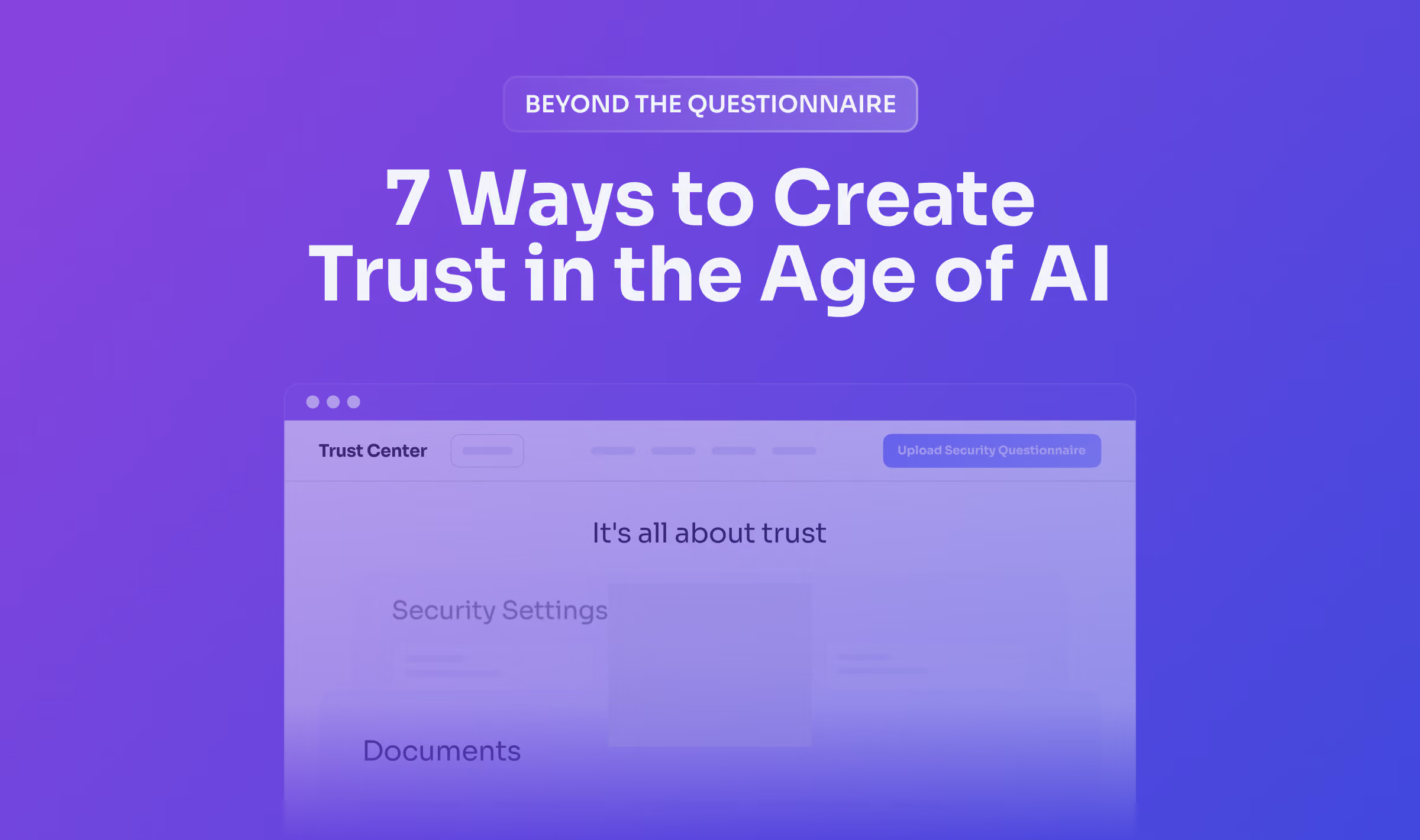
In the ever-shifting world of cybersecurity, the advent of artificial intelligence has fundamentally shifted the dynamics of the vendor-buyer relationship. During a recent webinar with ISMG, Merav Vered, Vice President of GRC & Strategic Initiatives at Vendict, explored how the traditional security review process is being redefined. With 30 years of experience in the field, Vered highlighted a critical new reality: in an era where buyers assume AI is generating your responses, trust is no longer earned through speed alone; it is earned through clarity, consistency, and control.
The “Trust Shift” in Security Reviews
Vered noted that the “old school” method of manual security reviews – characterized by long spreadsheets and too much back-and-forth – was expensive, slow, and created massive bottlenecks. While AI has arrived as a “magic” solution to these efficiency problems, it has introduced a new hurdle: buyer skepticism.
When prospective customers receive AI-assisted responses, their primary concern shifts from “What is the answer?” to “Can I trust this answer?” To navigate this trust gap, Vered argues that organizations must move away from a model of Information Discovery and toward one of Trusted Validation. In this new model, trust is often established before a single questionnaire is even sent.
7 Practical Strategies for Building Trust
To help GRC and security leaders navigate this transition, Vered shared seven actionable ways to build and maintain credibility with prospects:
- Establish Trust Before the Request: Vered emphasizes that security posture should be visible during the buyer’s initial research phase. By proactively sharing security maturity upfront, the formal questionnaire process shifts from a high-friction discovery phase to a simple confirmation of facts.
- Centralize Knowledge to Eliminate Inconsistency: Inconsistent answers across different documents or questionnaires are a major red flag for buyers. Vered recommends ensuring all responses originate from a single, governed source of truth. Consistency, she noted, is a direct signal of organizational control and maturity.
- Use a Reviewable, Evidence-Linked Environment: Confidence replaces doubt when buyers can see the connection between a claim and its supporting documentation. Vered advocates for handling reviews in environments where questions, answers, and evidence remain digitally connected, reducing the need for exhausting back-and-forth emails.
- Route Questions to the Right Experts: Even in an AI-driven world, human expertise remains vital. Vered suggests that directing specific questions to the most relevant internal owners – without losing the context of the overall review – results in more precise, defensible responses that require fewer follow-ups.
- Anchor Every Answer in Verifiable Evidence: AI-generated answers without proof introduce risk. Vered believes that every response must be traceable back to approved documentation, such as policies or audit reports. Evidence-linked answers withstand scrutiny and significantly shorten review cycles.
- Preserve Context Across Reviews: Re-answering the same questions can erode a buyer’s confidence. By retaining answers and clarifications over time, organizations demonstrate operational discipline and organizational memory, showing that their security program is stable and well-managed.
- Treat Reviews as an Ongoing Relationship: Security is not a "one-and-done" event. Vered encourages teams to move toward continuous trust maintenance. When updates and changes are shared transparently over time, the relationship strengthens, and trust is not reset with every new request.
The New Bottom Line: Proving, Not Just Saying
According to Vered, the goal of using AI in GRC should not just be about volume or speed. Instead, AI should act as a governed, evidence-linked layer over an organization’s single source of truth.
In her concluding remarks, Vered offered a final piece of advice for the modern security leader: “In the age of AI, security doesn't come from saying we’re compliant. It comes from providing clear, consistent evidence that proves you can be trusted.” By focusing on defensibility and transparency, organizations can turn the security review process from a hurdle into a powerful competitive advantage.
Next Steps
At Vendict, we are dedicated to helping GRC and security leaders navigate modern reviews with confidence as AI adoption grows. For a limited time, Vendict is offering an Interactive Trust Center free for three months. To find out how to launch a full Trust Center with unlimited profiles (such as products, solutions, and business lines) and unlimited access for prospects and customers, visit our website.